Design partnership with a HR unicorn innovating with AI

Enterprise marketing teams at scale face an impossible choice. Hire enough designers to handle every request internally, creating massive fixed costs. Or rely on external agencies for each project, losing consistency and accumulating onboarding overhead with every new partner.
Neither option works when you're an innovative HR company counting a number of Fortune 500 and tech companies including BBC, Uber, AstraZeneca, Autodesk, Nasdaq, and Workday, with moving at startup velocity.
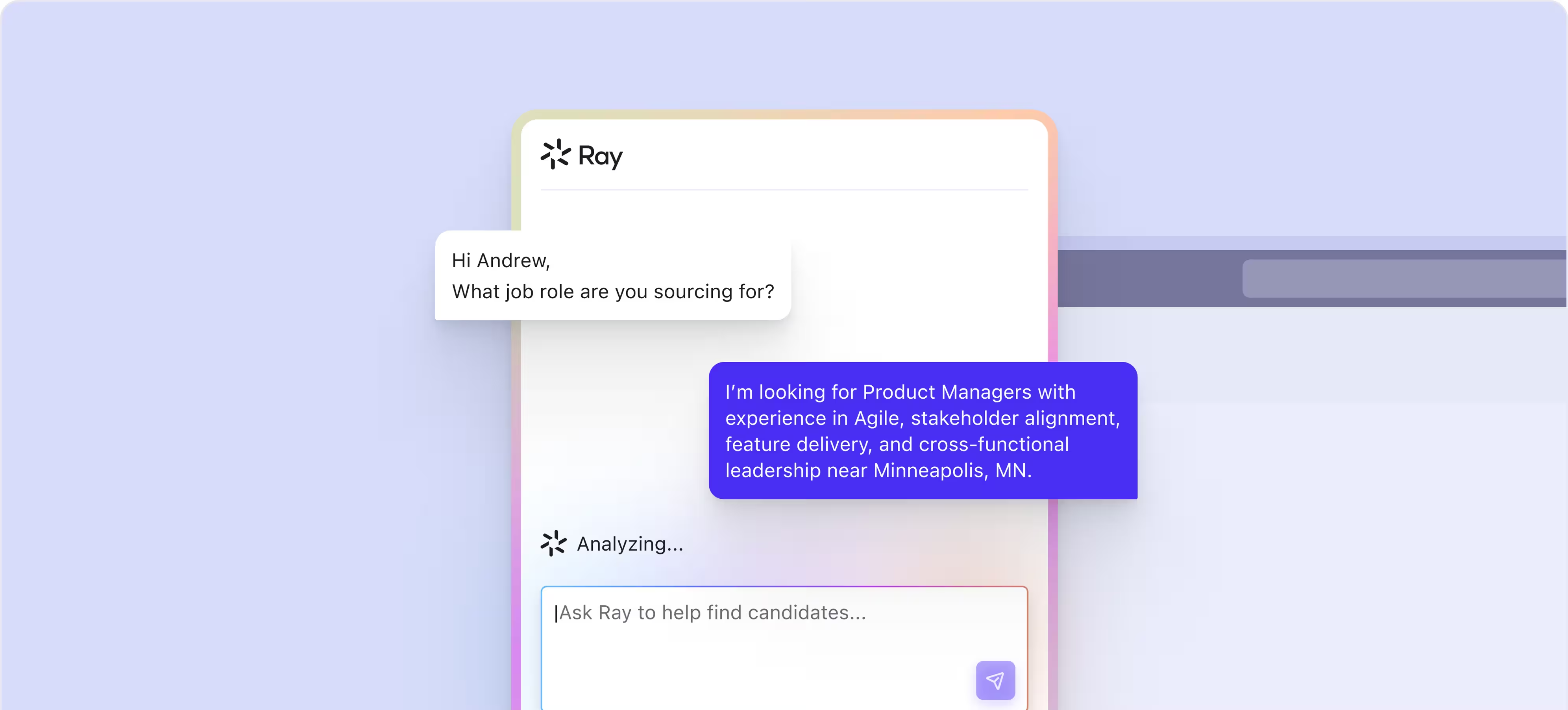
Beamery, the AI platform transforming how global enterprises manage workforce strategy, needed design capacity that could flex with their ambitions. They were launching Ray, their revolutionary agentic AI consultant, which required comprehensive branding. Their marketing team produced constant collateral for enterprise sales cycles. Their product team needed UI/UX expertise for internal reporting tools that lot of employees relied on.
The volume was uninterrupted. The quality bar was non-negotiable. And traditional agency relationships couldn't keep pace with their execution velocity or maintain the deep product understanding required.
Beamery needed a design partner who could function as an extension of their team, handling day-to-day production while providing specialized expertise for strategic initiatives. They needed someone who understood their brand, their audience, and their mission deeply enough to make decisions without constant oversight.
That's the partnership Tenscope built with Beamery.
Understanding enterprise scale and strategic priorities
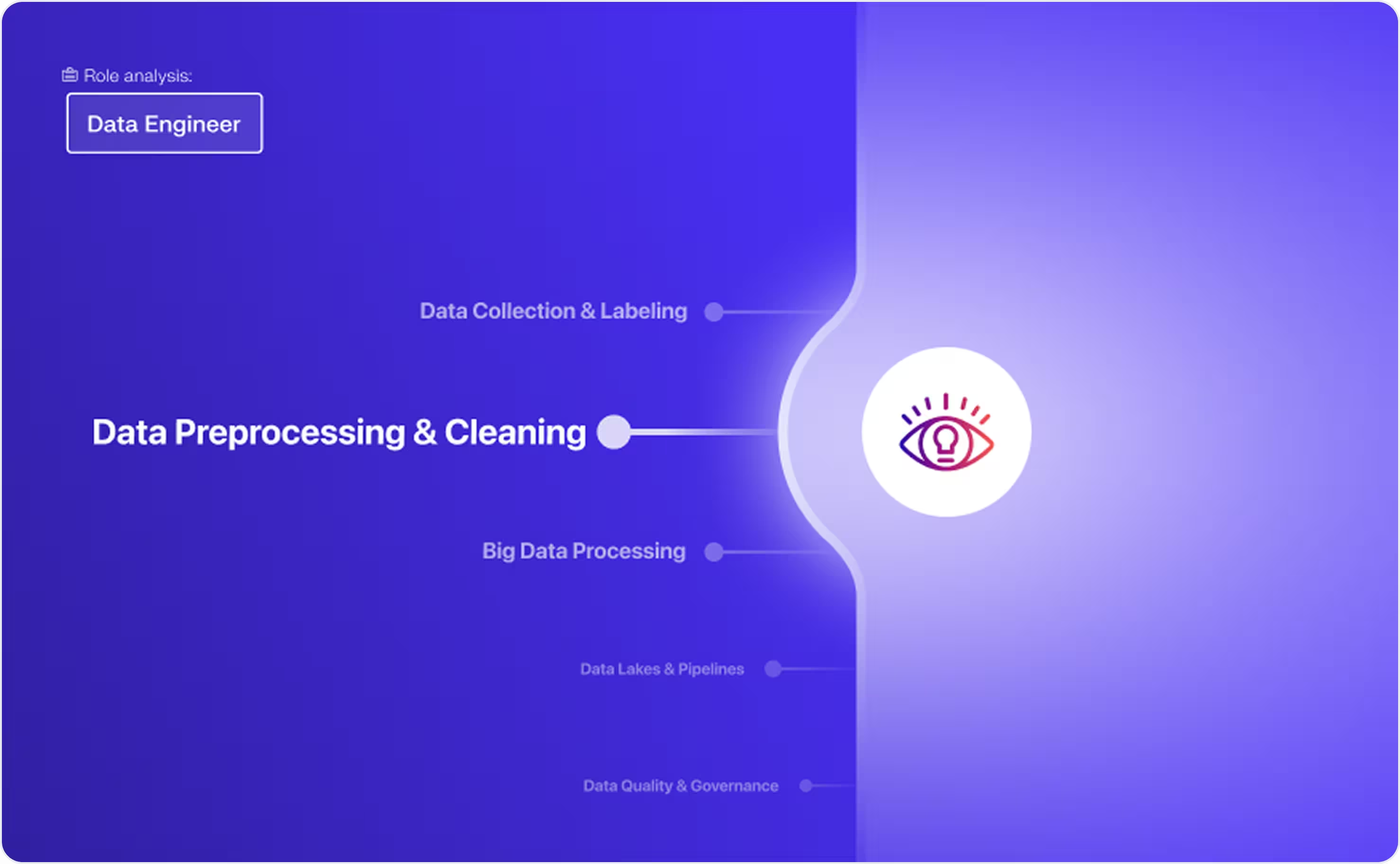
Beamery operates at the intersection of AI innovation and enterprise workforce management. Their platform helps global companies make critical talent decisions: hiring, redeployment, reskilling, workforce planning, using task-level intelligence and skills data.
The stakes are enormous. Their clients include Salesforce, Flex, Sellafield, and other enterprises managing workforces of thousands or tens of thousands. Marketing materials influence multi-million dollar sales cycles. Product interfaces affect how HR and business leaders transform their organizations.
Design quality directly impacts business outcomes at this scale.
The marketing team moved fast. Enterprise sales cycles demand constant collateral production, pitch decks for prospects, case study one-pagers for specific industries, event assets for conferences, social media content for thought leadership, website graphics for product launches.
Each asset needed to meet enterprise presentation standards while maintaining brand consistency across dozens of simultaneous initiatives.
Product initiatives required specialized expertise. Internal reporting tools, UI/UX improvements, and feature launches needed designers who understood complex workflows and could solve real usability problems, not just make things look polished.
Strategic initiatives demanded creative excellence. Launching Ray, Beamery's embedded AI consultant, required comprehensive branding that could establish this technology as innovative, trustworthy, and distinct in a crowded AI landscape.
The challenge wasn't finding designers. It was finding designers who could seamlessly integrate into Beamery's workflows, maintain their quality standards, scale capacity up or down based on needs, and provide both production efficiency and creative excellence when strategic projects demanded it.
Solving production bottlenecks through internal reporting redesign
Before addressing marketing collateral or brand initiatives, we tackled a workflow problem causing internal friction.
The monthly reporting challenge
Beamery's teams relied on monthly feedback reports to track performance, identify trends, and make data-driven decisions. These reports were critical for internal alignment across departments.
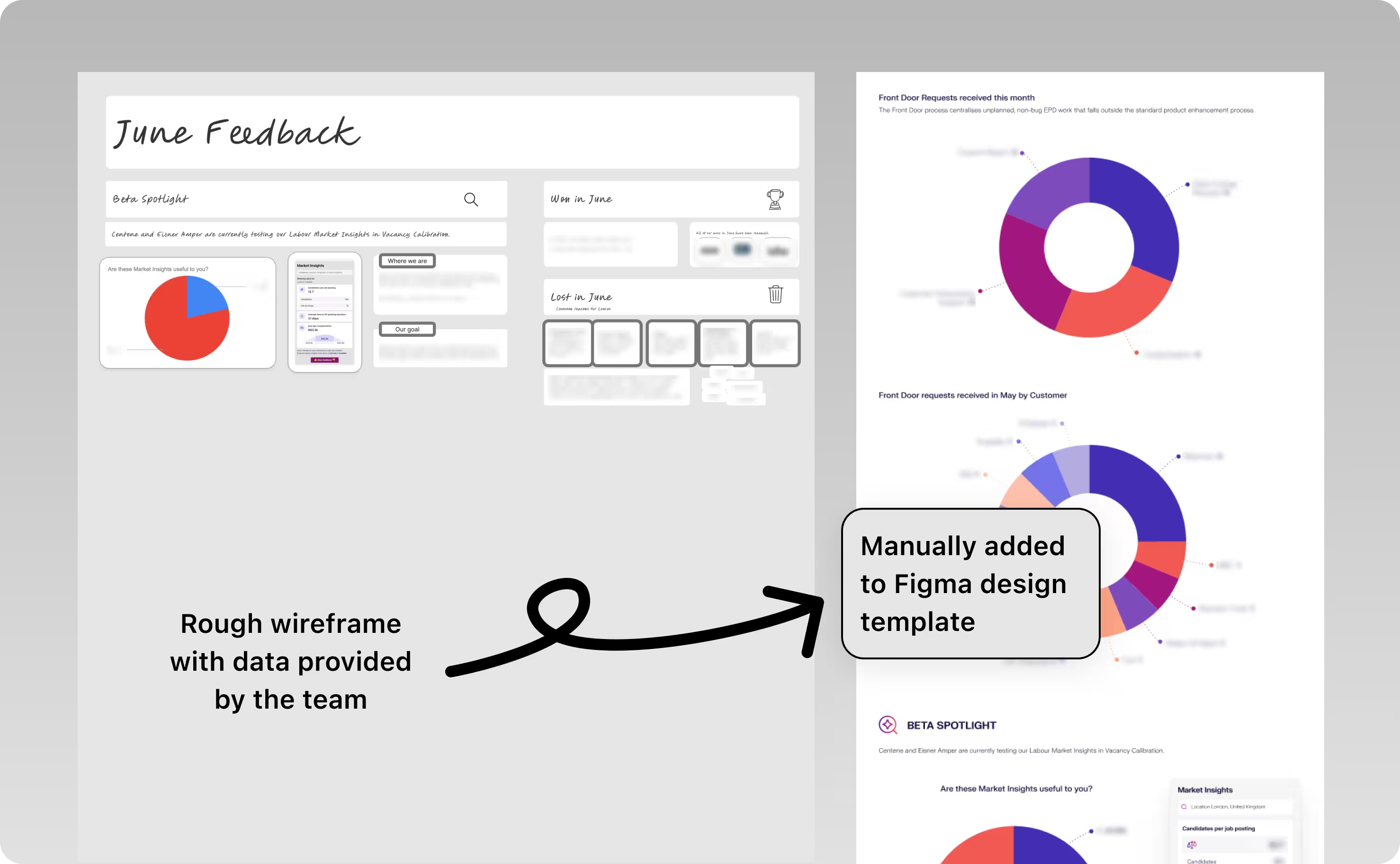
The original process was labor-intensive and inefficient. Reports existed as Figma templates that designers manually updated each month with new data. Every number, every chart, every metric required manual entry. Then designers exported PDFs for distribution.
This workflow created multiple problems:
Design time wasted on data entry. Designers spent hours each month doing work that had nothing to do with design: copying numbers, updating charts, reformatting tables. Time that should have been spent on strategic projects was consumed by repetitive manual updates.
Internal review bottlenecks. Because reports required manual compilation, multiple review cycles were needed to catch data entry errors. Stakeholders questioned numbers. Designers rechecked sources. Corrections required new exports and redistribution.
Limited accessibility. Reports distributed as PDFs became outdated immediately. If someone needed to reference insights from two months ago, they hunted through email attachments or Slack threads hoping they still had access.
Designing for automation and accessibility
We redesigned the entire reporting system around two principles: eliminate manual work, and make insights always available.
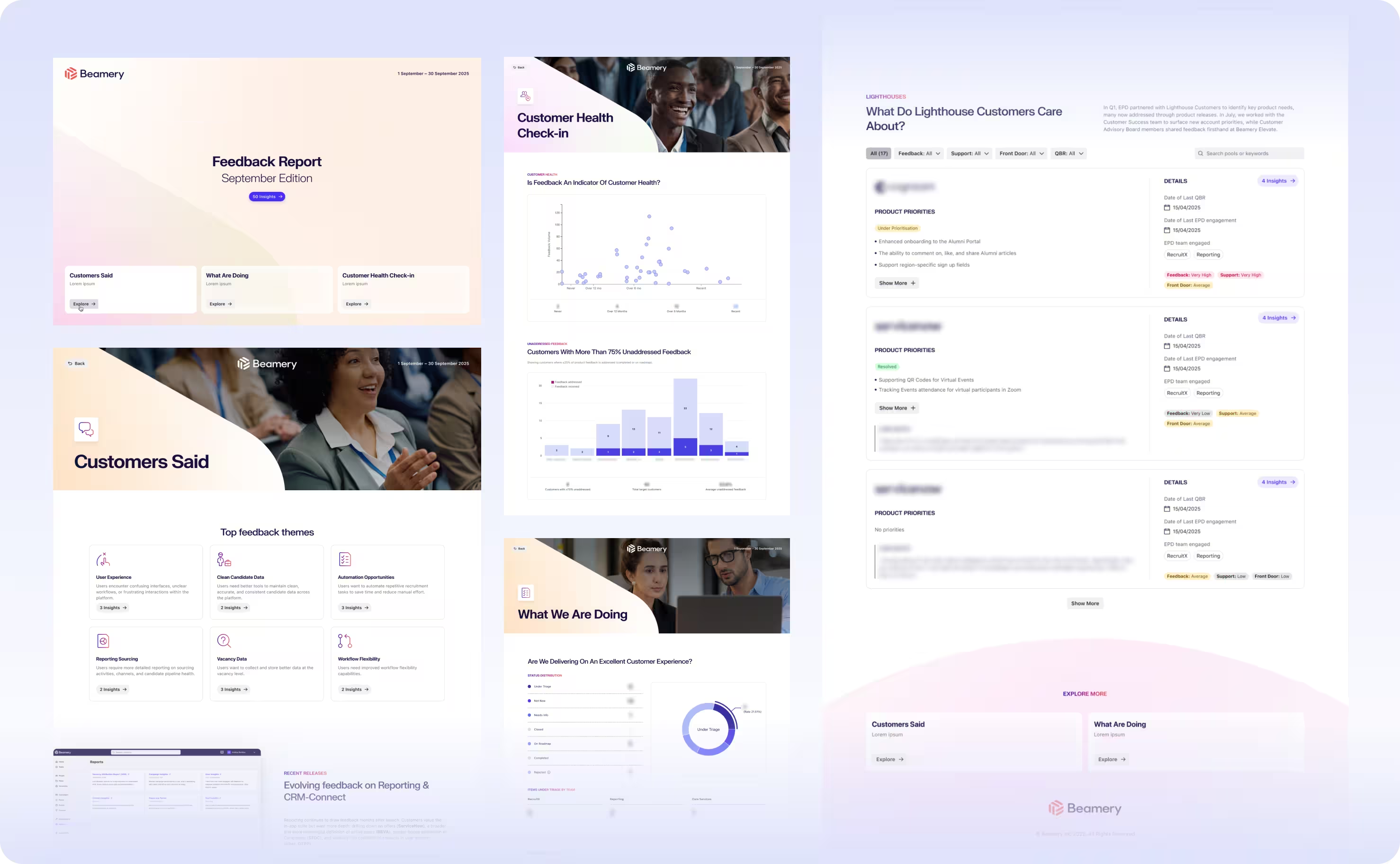
The new system moved reporting from static PDFs to a dynamic interface where data flows automatically into designed templates. Stakeholders access reports through a web interface showing current metrics with historical context immediately visible.
The UI presents information hierarchically. Key performance indicators surface first. Detailed breakdowns appear on demand. Trends display graphically with clear visual encoding, improvements show distinctly from declines. Comparisons across time periods or departments happen through filters, not by opening multiple documents.
Designers prepare templates once, not monthly. The interface adapts to whatever data feeds into it. New months appear automatically. Metrics update in real-time. The design work happens upfront in creating clear, scalable information architecture, not in repetitive data entry.
Everything we prepared for developers was implementation-ready. Detailed specifications, component behaviors, responsive breakpoints, data visualization standards. This reduced back-and-forth and accelerated development, delivering the system faster and with fewer revisions.
The transformation freed dozens of designer hours monthly while making insights more accessible to everyone who needed them. What was previously a bottleneck became an enabler.
Before:
After:
Building Ray's brand identity: making AI feel innovative and trustworthy
Ray represented Beamery's most ambitious product initiative, an agentic AI consultant embedded throughout their platform to guide talent decisions with clarity, speed, and precision.
Unlike traditional chatbots or copilots, Ray transforms workforce intelligence into contextual recommendations across sourcing, hiring, workforce planning, and upskilling. The technology was groundbreaking. The brand needed to match that innovation.
Exploring territory through initial concepts
We developed three distinct brand directions for Ray, each exploring different aspects of what this AI consultant could represent:
One direction emphasized intelligence and precision: clean geometry, sharp edges, technical sophistication. This positioned Ray as an analytical powerhouse, the data-driven advisor making sense of complexity.
Another direction leaned into guidance and partnership: warm colors, human-centric imagery, approachable forms. This framed Ray as a collaborative partner, the trusted advisor walking alongside HR leaders.
The third direction explored transformation and possibility: dynamic movement, gradient transitions, forward-looking aesthetics. This cast Ray as the catalyst for change, the tool enabling workforce evolution.
Each concept worked in isolation. The exercise revealed which brand attributes Beamery valued most for Ray: innovation balanced with accessibility, technical credibility without coldness, forward-thinking but grounded in practical outcomes.
Beamery selected the direction that best embodied these values, and we expanded it into comprehensive brand guidelines.

Developing comprehensive brand guidelines
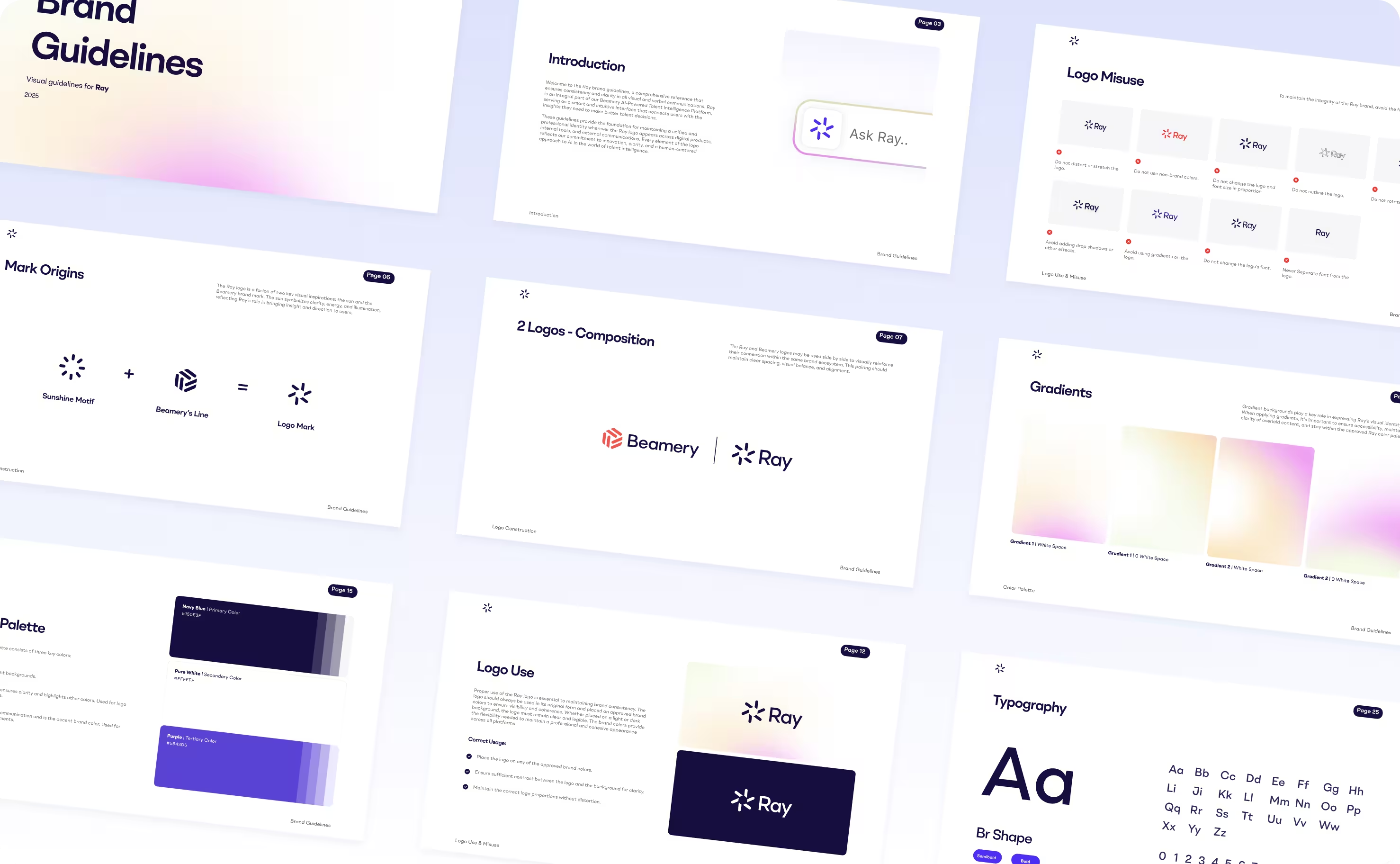
The chosen concept became the foundation for a complete brand system: logo variations, color palettes, typography standards, iconography principles, motion behaviors, application examples across different contexts.
The brand guidelines ensured Ray could appear consistently across Beamery's platform, marketing materials, and sales collateral while maintaining flexibility for different use cases.
The color system differentiated Ray from Beamery's core brand while feeling like part of the family. Distinct enough to signal "this is the AI layer," cohesive enough to feel native to the platform.
Typography and visual language balanced technical sophistication with approachability. Ray needed to feel intelligent without being intimidating, capable without being overwhelming.
Motion principles defined how Ray appears, responds, and guides users. Animation wasn't decoration, it communicated Ray's active intelligence, showing users that recommendations were being generated, refined, and delivered in real-time.
The guidelines positioned Ray not just as a feature but as a distinct brand within Beamery's ecosystem, something users would recognize, trust, and engage with regularly.
Bringing Ray to life through motion design
Static branding can only communicate so much. For an AI consultant whose defining characteristic is dynamic intelligence, motion design was essential.
We created a series of animated videos showcasing Ray in action: how it analyzes workforce data, generates recommendations, guides decision-making, and adapts to user needs.
These videos served multiple purposes:
Internal alignment: Beamery's teams gained shared understanding of how Ray should feel and behave across the platform. The animations became reference material for product development.
Customer education: Enterprise clients evaluating Ray could see it working in realistic scenarios, understanding the value before implementation conversations even began.
Brand presence: The animations appeared in pitch decks, on Beamery's website, at conferences, and, notably, on a TV screen in Beamery's office. (The team loved them so much they became ambient presence in their workspace, which might be the ultimate compliment for design work.)
The motion work received overwhelmingly positive feedback from both Beamery's internal teams and their customers. The animations didn't just explain Ray, they made people excited about the possibilities.
Supporting day-to-day marketing operations at scale
Social media content
Enterprise thought leadership happens on LinkedIn. Beamery's marketing team published constantly: company updates, product launches, industry insights, customer success stories, event announcements.
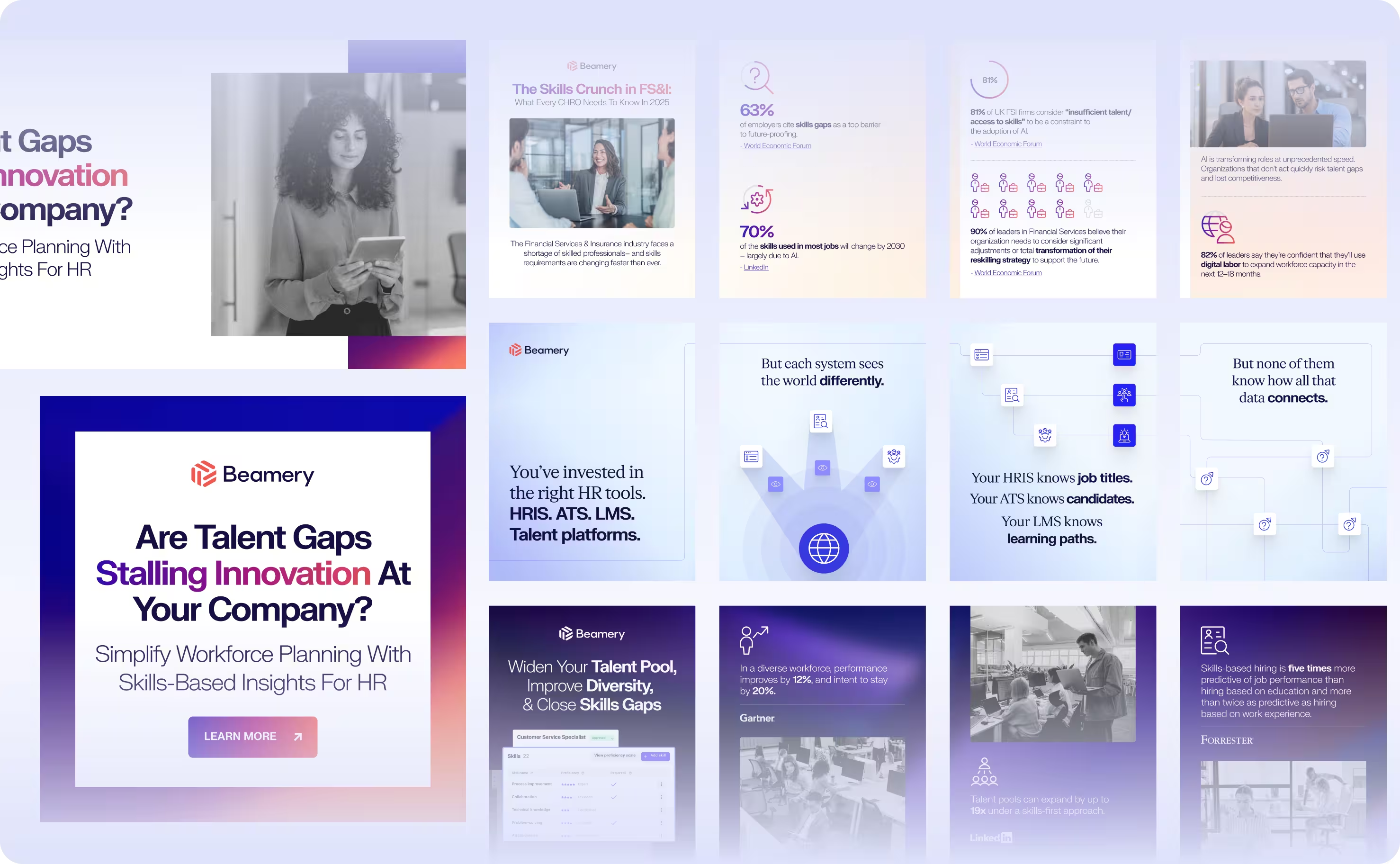
We designed social media posts and carousels that maintained brand consistency while adapting to different content types. Educational carousels that broke down complex workforce concepts. Announcement graphics that highlighted new capabilities. Event promotions that drove registration.
Each piece needed to work in LinkedIn's feed environment: grabbing attention quickly, communicating value clearly, and driving engagement without feeling like generic corporate content.
Presentation decks
Enterprise sales depend on polished presentations. Every prospect meeting, every stakeholder briefing, every investor update required deck design that reflected Beamery's sophistication.
We created presentation templates and designed custom decks for specific opportunities. The work ranged from formatting existing content to designing full narrative structures that guided audiences through complex workforce transformation concepts.
Sales teams needed decks that worked in formal presentations and as standalone leave-behind materials prospects could review independently. Each slide balanced information density with visual clarity, ensuring key messages landed whether someone was listening to a presenter or reading alone.
Infographics
Workforce intelligence involves complex data: skills gaps, task analysis, talent market trends, automation opportunities. Making this data accessible and compelling required thoughtful information design.
We created infographics that transformed dense research findings into scannable visual narratives. These appeared in blog posts, whitepapers, sales materials, and presentations, helping Beamery communicate insights that differentiated their platform.
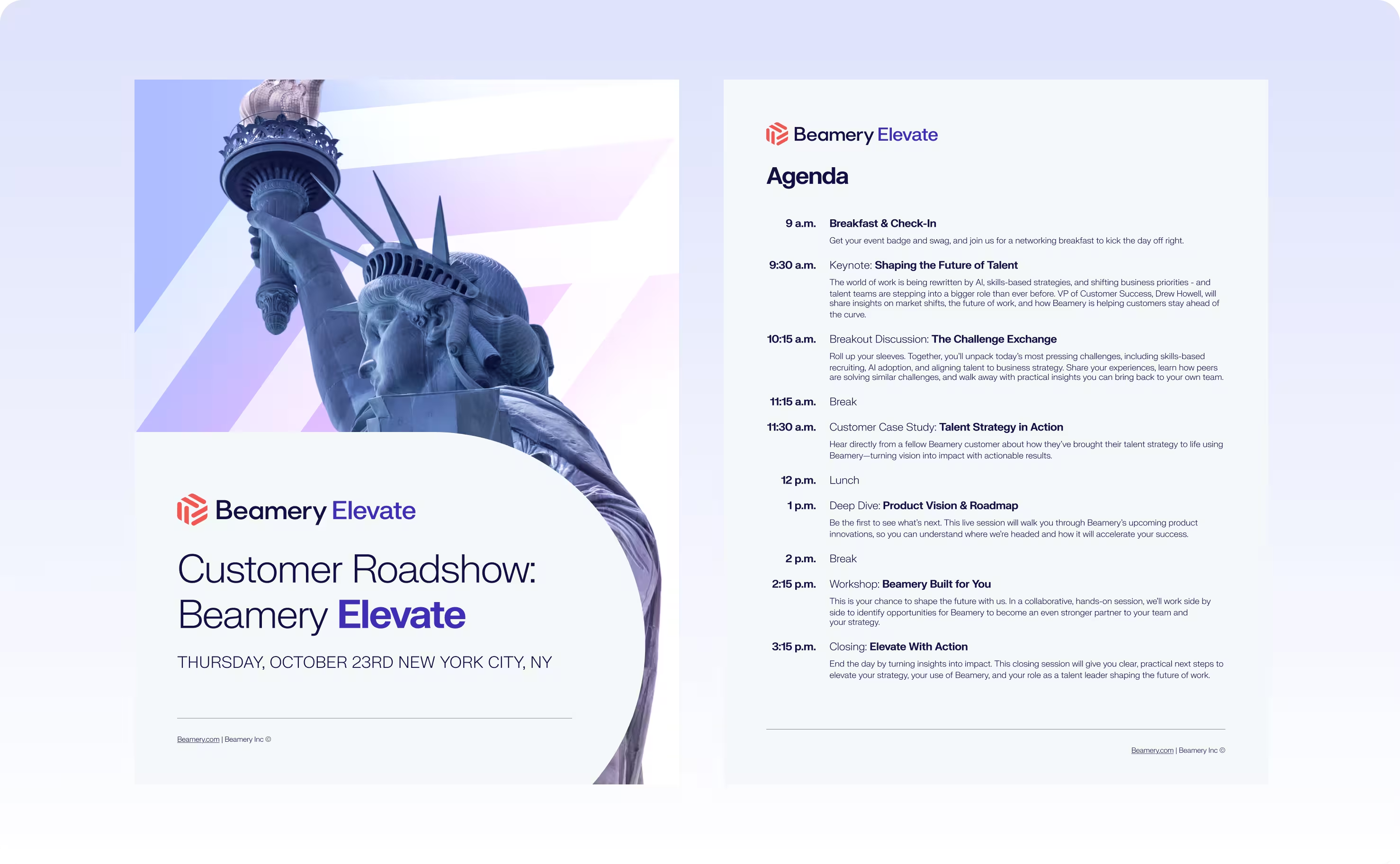
Event assets
Conference presence requires comprehensive design support: booth graphics, promotional materials, speaker presentation templates, digital assets for event apps, social media content for pre-event promotion and live coverage.
We provided complete event packages that ensured Beamery's presence at industry conferences matched their brand standards and stood out in crowded exhibition halls.
“Tenscope didn’t just take our brief.. they took the time to truly understand our mission, our audience, and what our platform actually does. They delivered high-end motion and visual assets with the exceptional responsiveness and breadth of specialization you’d expect from a full-stack premium agency.”
Bonnie Lee Product Marketing Director
How the partnership works
The collaboration's success came from combining operational structure with flexible expertise.
Centralized workflow through Asana and Slack. All design requests flowed through Asana for transparency and tracking. Slack enabled real-time communication for quick decisions. Figma served as our collaborative workspace, integrated into Beamery's existing file structure. Daily alignment calls kept priorities clear and blockers resolved quickly.
Flexible team structure. One main graphic designer handled day-to-day marketing collateral: social posts, deck formatting, event assets, becoming deeply embedded in Beamery's brand. Specialized experts engaged for strategic initiatives requiring deeper skills: branding for Ray, UI/UX design for internal tools, motion design for animations. This gave Beamery predictable capacity for routine work plus access to specialized expertise when important projects demanded it.
What this delivered. Production velocity increased dramatically. Marketing requests moved through established workflows with predictable timelines. Brand consistency strengthened across all touchpoints, from social posts to strategic branding. Strategic initiatives like Ray's brand identity got the creative attention they deserved. The internal team focused on strategy while we handled execution at enterprise quality standards.
The embedded partner model. Traditional agencies create friction at velocity, every project requires re-briefing and context-sharing. Traditional in-house teams struggle with capacity flexibility. This partnership combined the context understanding of in-house teams with the capacity scaling and specialized expertise of external partners. We function as an extension of Beamery's team, making decisions collaboratively and maintaining quality that supports their growth as a unicorn transforming workforce management through AI.
Related case studies